Summer Institute for Computational Social Sciences
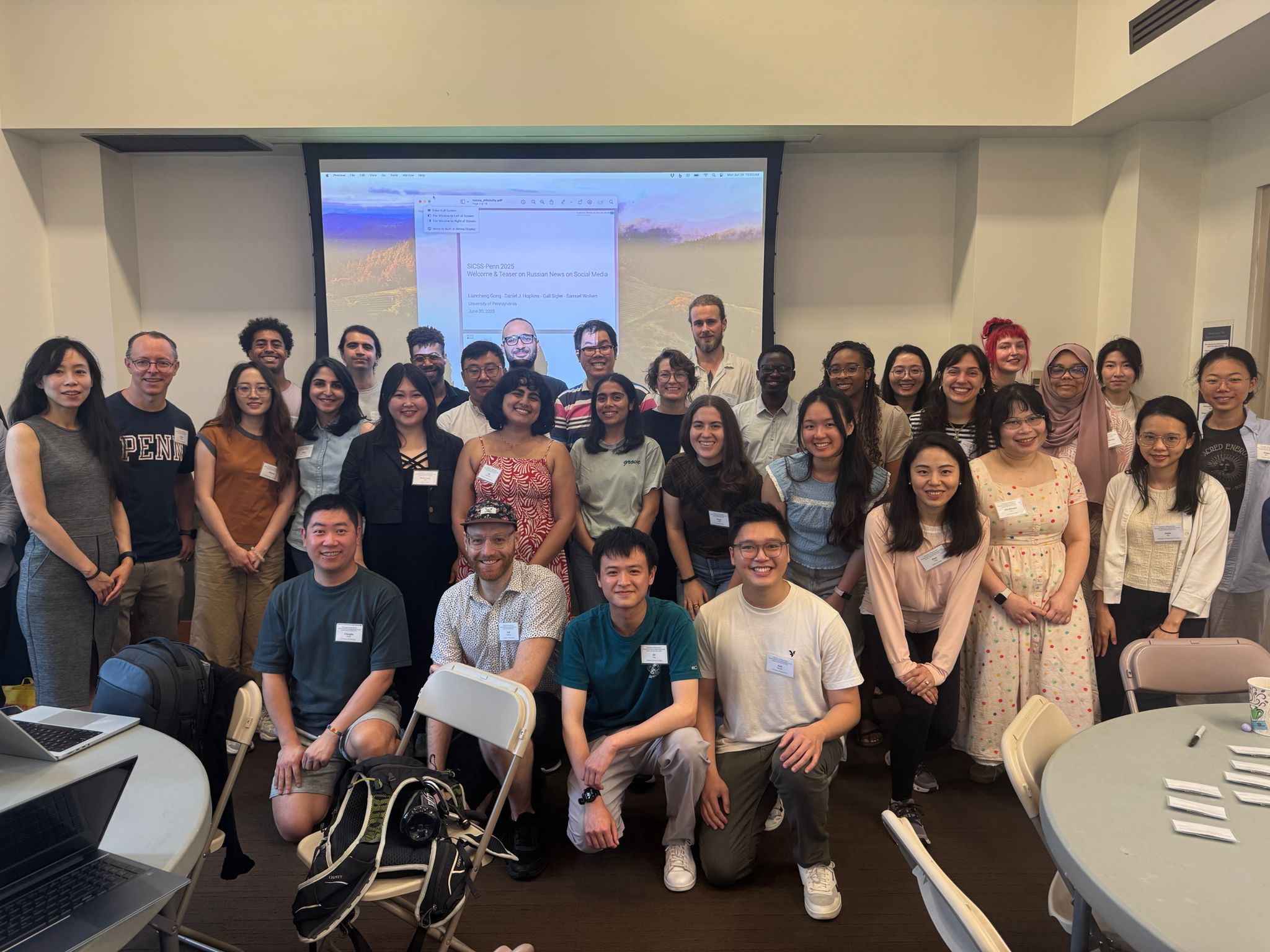
From June 30th to July 11th, I had the honor of attending SICSS at UPenn. I had the chance learn about the various cutting-edge computational methods that are used in social sciences, and made many great friends! As part of our team project, we focused on whether LLMs are capable of replicating real world cultural tightness-looseness of various populations around the globe. Preliminary results showed that LLMs return different results when prompted in different languages, especially if those languages are from traditional tight vs. loose cultures (e.g., English vs. Chinese).
Poster Presentation at SPSP 2025
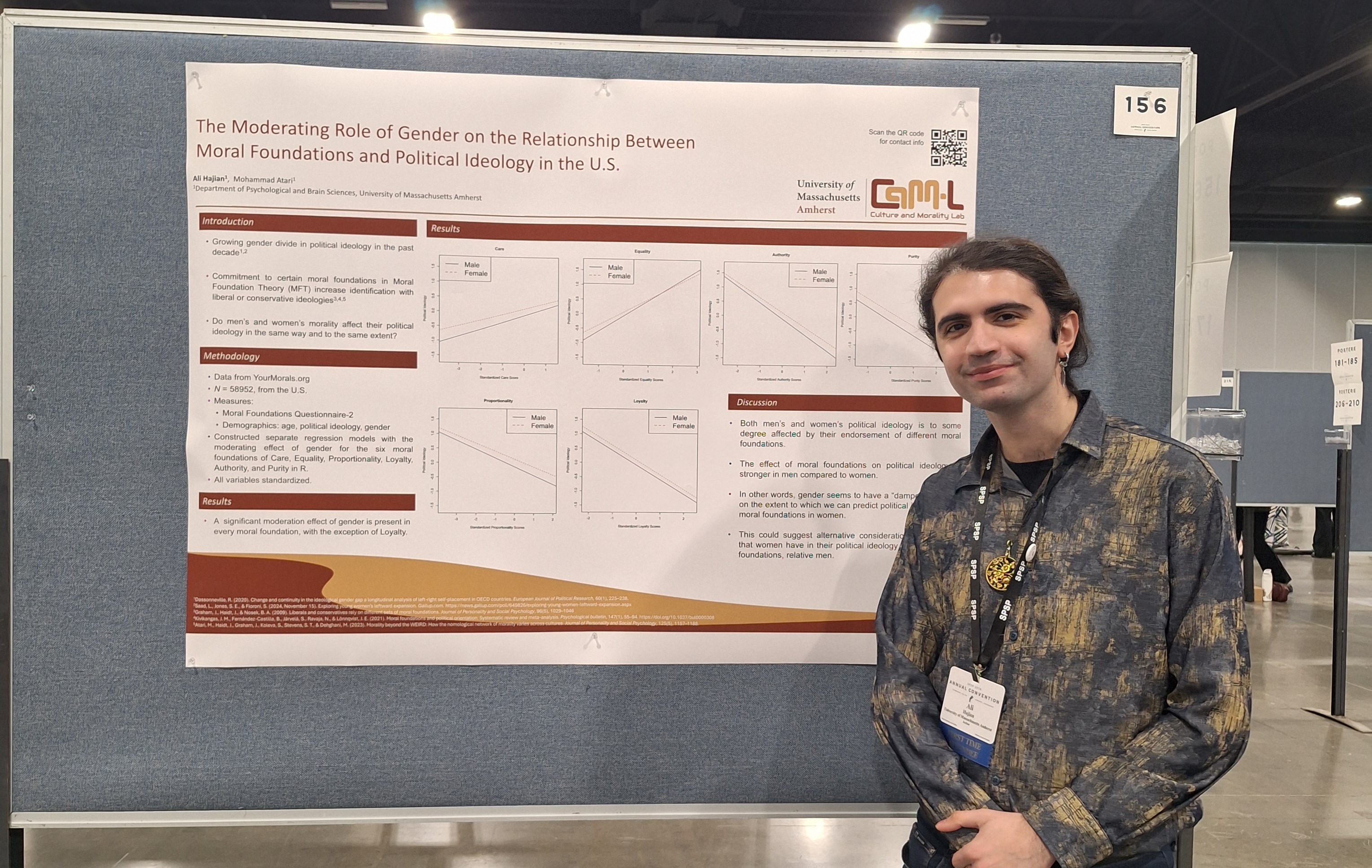
In February 2025, I was presenting my poster on how gender moderates the relationship between morality and political ideology in Denver at the annual SPSP conference. I found that the relationship is stronger for men compared to women. This was also my first in-person conference!
Linking Pain with Irrational Beliefs
In 2023 and as part of Social Personality Undergraduate Research (SPUR) Program, I worked in Dr. Spike W. S. Lee’s lab on the link between pain sensitivity and a host of higher-order beliefs and attitudes. Specifically, we found that pain sensitivity predicts irrational beliefs such as paranormal traditional beliefs or belief in witches. You can find a version of my presentation for SPUR’s conference here.
Polarization of Attitudes towards Behavioral Interventions
As part of the Junior Researcher Programme and working with an international team led by Dr. Jelka Stojanov, we experimentally investigated whether people in the UK and Slovenia perceive political polarization in relation to nudges is greater than it actually is (i.e., partisan nudge bias). Initial results suggest that partisan cues increase the perception of polarization beyond the actual level of polarization.